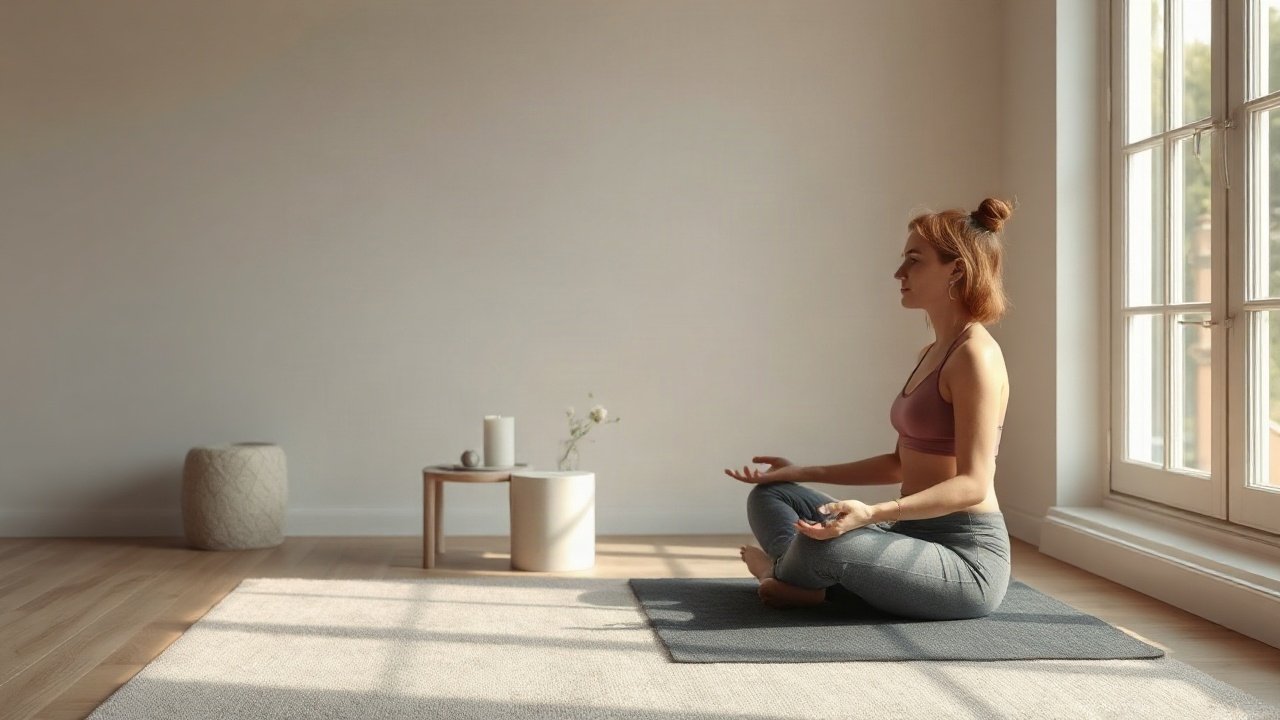
Meditation for manifestation can support calm when meditation is doing a clear psychological job—settling attention, observing thoughts, clarifying an intention—and the manifestation claim is kept separate. You do not need to believe that a calm mind attracts the outcome.
For this page, the practice is to notice the breath and body, allow the urge to solve everything at once to soften, then choose the next task. Finish by taking the next practical step rather than extending the meditation until certainty appears.
A five-minute structure
Minute 1 — arrive. Notice contact with the chair, floor or breath.
Minutes 2–3 — observe. Let thoughts about calm appear without arguing with each one. Label planning as planning, worry as worry and fantasy as fantasy.
Minute 4 — choose. Bring one intention or process image into focus. Keep it tied to something you can influence.
Minute 5 — exit. Name the next action: use one brief practice before that transition, then begin the next task without extending the ritual. Then end the session.
The fixed exit matters. Meditation should prepare participation in life, not become a place to hide from the next decision.
What to do when the mind wanders
Wandering is not manifestation failure. It is part of attention practice. Notice the thought and return without deciding that an intrusive image has created a future event. That interpretation can make ordinary mental noise feel dangerous. In Meditation for Manifestation for Calm: A Practical Guide, keep that boundary attached to the specific situation described on this page.
For a predictable transition when your mind is crowded and you need to settle before the next task, the aim is not a blank mind. The aim is enough space to choose what deserves attention next.
Evidence boundary
Meditation and mindfulness have direct research traditions for particular psychological outcomes, although effects vary by method, population and context. Those findings can support careful claims about attention or emotional regulation. In Meditation for Manifestation for Calm: A Practical Guide, keep that boundary attached to the specific situation described on this page.
Traditional belief: manifestation-oriented meditation may add ideas about vibration, attraction or impressing a desired outcome.
Unsupported or unknown: meditation research does not establish that thinking about a desired event causes that external event to occur.
If distress is severe or persistent, a manifestation exercise is not a replacement for appropriate professional support. Keep any wellbeing claims proportionate and do not present this practice as treatment.
Common mistake: chasing the “right state”
Users often judge a session by tingles, deep relaxation, visual vividness or whether the intention felt emotionally charged. None is required. Chasing those states can turn a five-minute practice into repeated attempts to get the session “right.” In Meditation for Manifestation for Calm: A Practical Guide, keep that boundary attached to the specific situation described on this page.
Use a functional score instead: could you return attention, notice the thought without obeying it, and begin the next useful action?
From ritual to evidence: one calm scenario
Do not test the method against 'my whole calm life.' Test it against the transition from a crowded inbox into an afternoon task when your attention is still carrying five unfinished threads. The friction is treating calm as something that must be achieved perfectly before work can begin; that gives the experiment a place to succeed or fail in observable terms.
Use a small six-item sheet rather than a mood score:
- Breath count: record one concrete fact about it before interpreting the result.
- Closed inbox: record one concrete fact about it before interpreting the result.
- Next task: record one concrete fact about it before interpreting the result.
- Body tension: decide in advance what useful movement would look like.
- Transition cue: decide in advance what useful movement would look like.
- Reassurance check: decide in advance what useful movement would look like.
The evidence point is not a sign; it is whether you can settle for a few minutes, choose one task and start while some tension is still present. Follow that with this constraint: end on schedule and begin the named action. If nothing useful changes, the method does not need defending.
This field test is deliberately narrower than the headline title. That is a quality feature. It gives the page a distinct Meditation for Manifestation × calm answer instead of changing only the noun while repeating the same advice.
Next step
Run one five-minute session for this calm goal. When it ends, do not journal for another hour. Complete the action you named: use one brief practice before that transition, then begin the next task without extending the ritual. Review later using time to settle, task switching, reassurance checking and clarity about the next action.