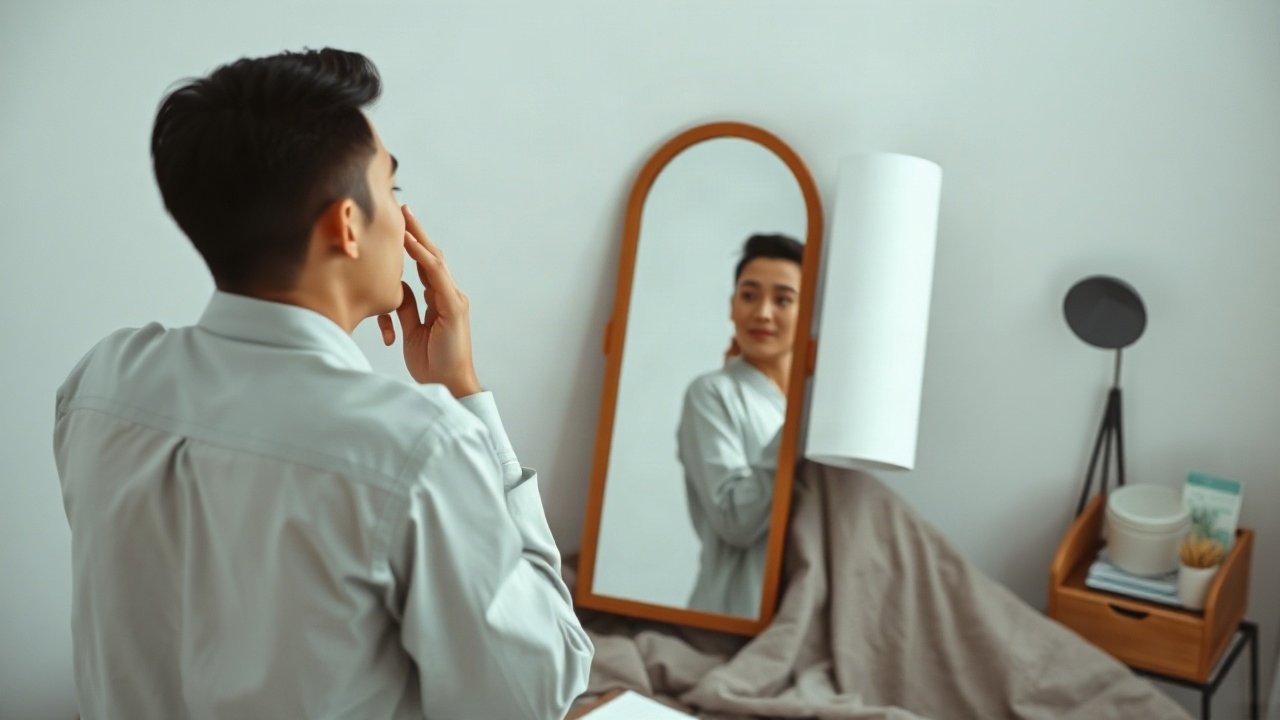
Visualization for academic confidence is most useful when it rehearses a process you may actually need to perform. The aim is not to make the final picture vivid enough to force reality; it is to make the next difficult behaviour more familiar.
Visualize the process, not only the result
Build the scene around Pick one topic, answer ten questions without notes, mark the gaps, then repeat a matched set forty-eight hours later.. Picture the sequence that creates evidence: starting, noticing the constraint, making the decision and completing the practical move. Keep the scene close enough to reality that you could attempt some version of it this week.
Put the difficult moment inside the scene
The likely friction includes comparison with stronger classmates, avoiding retrieval practice because mistakes feel exposing, studying without feedback, or making confidence a prerequisite for starting. Choose the one that currently matters most. Rehearse noticing it without turning the discomfort into a sign to stop, then practise the specific response you want available under pressure.
Use detail only where it helps
You do not need cinematic imagery. If pictures are weak, narrate the steps, write them as a short scene or use spatial/motor rehearsal. For academic confidence, the useful detail is whatever helps you remember the sequence, cue the behaviour and reduce friction at the point of action.
End with a 24–48 hour bridge
Finish the scene on an action you control and schedule it in CLEAR Planner. The bridge should create evidence related to attempted questions, corrected errors, delayed-recall accuracy and how quickly you restart after a mistake. If the scene ends only with the final outcome, add one earlier decision until it points naturally into something observable.
Reality-check the rehearsal
Judge the academic confidence scene by transfer. Within two days, complete one real version of the rehearsed behaviour and note what changed at the difficult point. If repeating confidence affirmations while continuing to avoid the tasks that would produce mastery evidence still dominates, simplify the scene until it rehearses the response rather than the fantasy. Other people, institutions and markets remain independent variables.
Worked use case
A student who feels "bad at economics" may discover that graphs are the narrow bottleneck while written explanations are already strong. Rebuild that example as a rehearsal scene: focus on the behaviour that changed the mechanism, not the satisfying final snapshot. Then compare the imagined version with the real attempt and update the next scene using what you learned.
One scene to avoid
Avoid using repeating confidence affirmations while continuing to avoid the tasks that would produce mastery evidence as the emotional centre of the practice. If the imagery rewards avoidance, certainty-seeking or a route that evidence no longer supports, it can become a polished form of procrastination. Rehearse the next credible bridge instead.
Let evidence rewrite the scene
Use this pivot rule: If accuracy improves but confidence lags, keep practising; if accuracy stays flat, change the learning method or seek teaching support. Visualization is allowed to evolve as reality teaches you more. Accuracy and usefulness matter more than staying loyal to the first imagined script.
A three-minute rehearsal for academic confidence
For this academic confidence rehearsal, alternate between imagery and words. Picture one moment, then state the decision in a sentence, then picture the physical action. This is useful when visual detail is weak and keeps the exercise tied to behaviour rather than cinematic vividness.
Use the scene to expose a blind spot
Before finishing, ask what the visualization is leaving out. For academic confidence, the hidden issue may be studying without feedback or making confidence a prerequisite for starting. Add one of those constraints to the rehearsal and practise the response you would actually want available. If the scene becomes impossible to specify, that is useful information: you may need research, a conversation or a small experiment before more visualization helps.
Then use the rule If accuracy improves but confidence lags, keep practising; if accuracy stays flat, change the learning method or seek teaching support.. A scene should evolve when evidence changes the task. Rehearsal is successful when it improves preparation, not when it protects the first imagined route from revision.
Bottom line
Visualize academic confidence by rehearsing useful behaviour, including obstacles and ending on a controllable action. Judge the scene by whether it improves preparation—not by whether it feels like proof that the outcome is guaranteed.