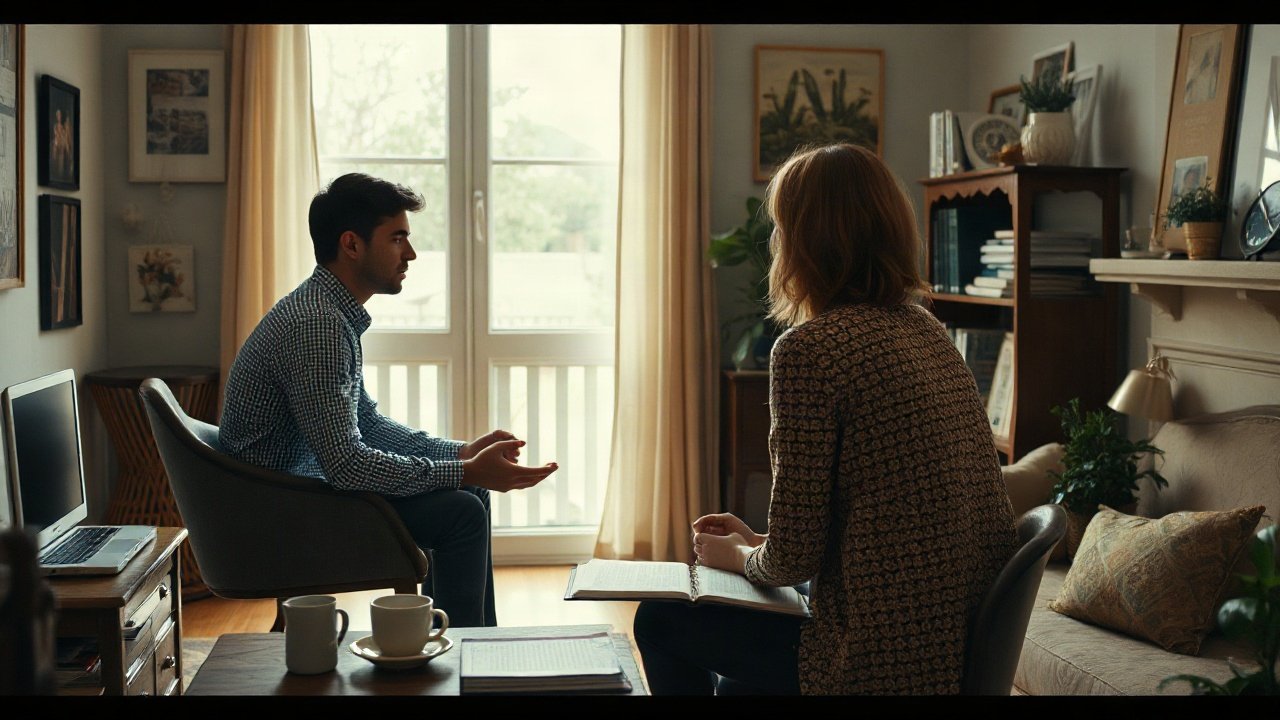
Use visualization for reconciliation as a rehearsal room, not a prediction machine. The point is to make a useful action, boundary or recovery response more familiar before you meet the real situation.
Rehearse the point where reconciliation usually gets difficult
Start with the real friction, not the finished picture. For reconciliation, the obstacle may be using nostalgia as proof the relationship should resume, ignoring the problem that ended the relationship, seeking reunion before both people have freely chosen it, or treating contact as evidence that trust has been repaired. Pick the one with the strongest recent evidence. Picture the cue that starts that pattern and rehearse one different response. If you cannot name the response, gather information first; visualization cannot substitute for a missing plan.
Keep the evidence claim proportionate
Do not collapse different claims about reconciliation. Supported/grounded: you can rehearse your own response. Adjacent evidence: mental practice can sometimes support preparation when paired with real practice. Traditional belief: manifestation teachings may frame imagery as causative. Unsupported/unknown: that a vivid scene compels the desired external outcome.
Turn the concrete example into a rehearsal scene
An ex saying they miss you is emotionally meaningful but still different from taking responsibility and agreeing how the old conflict will be handled. Use that as a model for reconciliation: rehearse the decision immediately before the mechanism changes, not merely the satisfying result. Then picture the first piece of feedback and how you will respond without exaggerating it. Useful visualization prepares you to notice evidence, including evidence that the original route is weak.
Build a three-level rehearsal instead of a perfect ending
Run three short versions of the reconciliation scene: an easy attempt, a realistic version where ignoring the problem that ended the relationship appears, and an imperfect attempt where you recover after hesitation or ambiguous feedback. Keep the same core behaviour across all three. End with this bridge: Write the three conditions that would need to be different for reconciliation to be viable, then look only for reciprocal real-world evidence of those changes. The goal is to practise continuation, not a flawless movie.
Test whether the scene transfers into behaviour
Within forty-eight hours, perform the smallest real version of the rehearsed move. For reconciliation, useful transfer might show up first in mutual communication, accountability, or explicit willingness to rebuild. Record whether the scene improved execution, then put the next bridge in CLEAR Planner. If urgency is distorting the review, use Pulse before changing the plan. If nothing transfers, shorten the visualization and move it closer to the exact behaviour.
Let evidence decide what the next scene should contain
Use the pre-decided rule: If change is mutual and sustained, proceed slowly; if the old pattern returns or consent is absent, redirect toward recovery and future standards. Compare it with mutual communication, accountability, changed behaviour, boundary respect and explicit willingness to rebuild after the real attempt. If the mechanism is improving, rehearse the next harder version. If the route is weak, change the strategy and therefore the scene—not because you failed to imagine intensely enough. Reality is allowed to edit the script.
Put the blind spot inside the picture
The easiest scene often removes the real constraint. Add seeking reunion before both people have freely chosen it or treating contact as evidence that trust has been repaired to the reconciliation rehearsal and decide what you will do when it appears. Also include the pattern you do not want to reward: counting dreams, likes or indirect contact as proof of repaired compatibility. If the scene makes that pattern feel justified or inevitable, rewrite it so the better response is what gets practised.
Rehearse recovery as carefully as success
Picture one reconciliation attempt that does not go to plan: the response is slow, the first try is clumsy or using nostalgia as proof the relationship should resume returns. Rehearse the next useful move instead of restarting the whole manifestation routine. Then return to Write the three conditions that would need to be different for reconciliation to be viable, then look only for reciprocal real-world evidence of those changes. One imperfect outcome is a data point, not proof that the scene failed or that an external variable must obey you.
Preserve consent and reciprocity
When reconciliation involves another person, rehearse your own communication, boundaries and recovery—not their obedience. Direct behaviour, mutual communication and freely chosen reciprocity are evidence. Silence, rejection or inconsistent behaviour should not be rewritten as hidden commitment simply because the scene was vivid.
Bottom line
Visualize reconciliation by rehearsing the cue, friction, response, recovery and next real action. Let evidence update the scene. Judge the practice by better preparation and behaviour—not by whether imagination feels like proof that the external result is secured.